
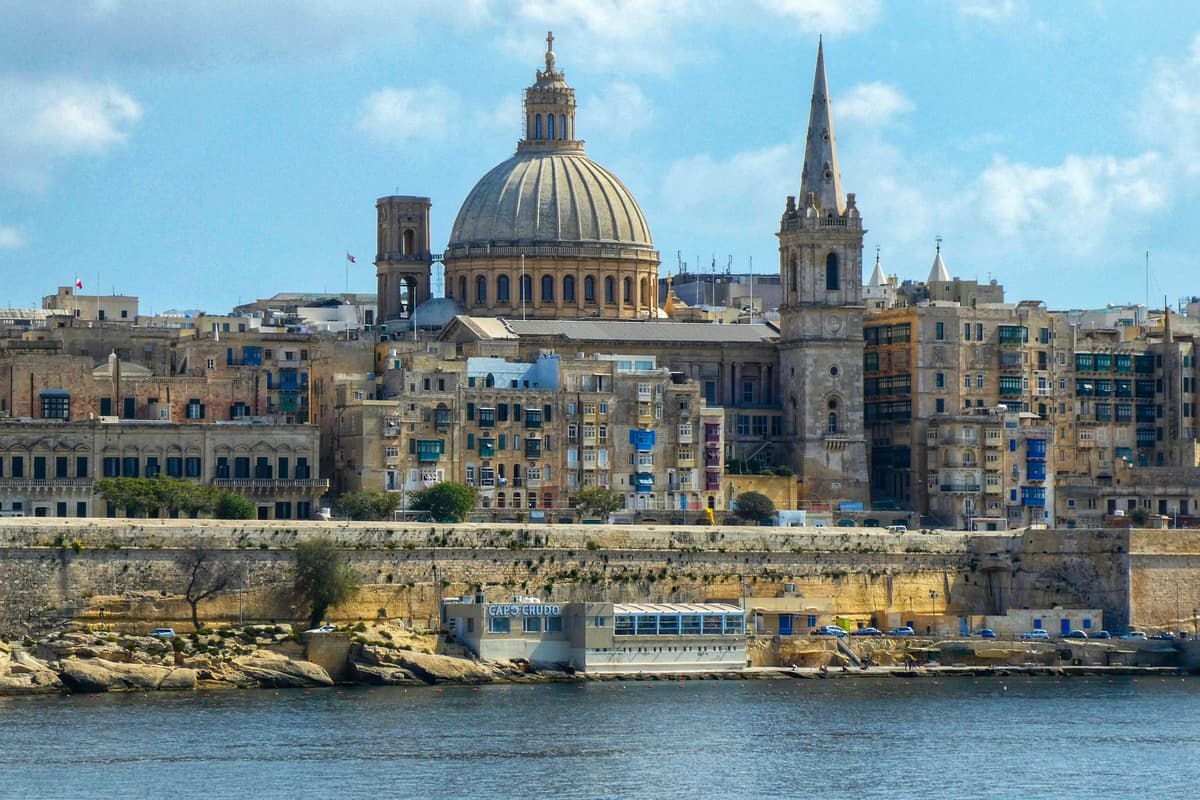
Malta weather,live and 7 days ahead.
7-day forecast
Valletta
Good for today
Picked from the live conditions
Climate
Malta's year at a glance
Travel planning
Best time to visit Malta
Peak season
June to August
28–31°C
Hot, dry and reliably sunny. Ideal for beaches, boat trips and the Blue Lagoon. Busiest and priciest time of year.
Shoulder season
April–May & September–November
20–28°C
Warm days, warm sea and thinner crowds. The sweet spot for sightseeing, hiking and swimming in one trip.
Off season
December to March
15–17°C
Mild and green with occasional rain. Quiet heritage sites, lower prices and great walking weather.
What to pack
Summer · Jun–Aug
- Light, breathable clothing
- SPF 50+ sunscreen
- Wide-brimmed hat
- Swimwear & water shoes
- Reusable water bottle
Spring & autumn
- Light layers
- Comfortable walking shoes
- Light jacket for evenings
- Sunglasses
- Day backpack
Winter · Dec–Feb
- Medium-weight jacket
- Compact umbrella
- Warm sweater or fleece
- Waterproof shoes
- Scarf for windy days
FAQ
Malta weather questions
What is the best time to visit Malta?
Spring (April to June) and autumn (September to November) offer pleasant temperatures of 20–28°C, smaller crowds and little rain. July and August are hot and busy, while December to February is mild but can be rainy.
What is the hottest month in Malta?
August is typically the hottest month, with average highs of 31°C (88°F) and sea temperatures around 26°C. July is equally hot but slightly less humid.
Does it rain a lot in Malta?
Malta has low rainfall overall and it rarely rains from June to August. Most rain falls between October and February, with December the wettest month. The islands see over 300 sunny days a year.
Can you swim in Malta in winter?
The sea stays around 15–18°C in winter, so swimming is possible for hardy swimmers. Most visitors swim comfortably from May to November, when the sea is 19–26°C.
Is Malta very windy?
Malta can be windy from November to February, when the Grigal (north-east wind) blows and can disrupt boat trips. Summer is usually calmer, with light sea breezes.
What is the UV index like in a Maltese summer?
Summer UV in Malta often reaches 9–11 (very high to extreme). Use SPF 50+ sunscreen, wear a hat and seek shade between 11am and 3pm.
Rain or shine, Malta is better with a local.
Air-conditioned private tours and drivers with flexible itineraries, so you can swap a beach day for Mdina if the weather turns.
A4 Malta · Malta Tourism Authority licence TRA/D02 · +356 7738 0789